Environmental claims are the most heavily scrutinised area of advertising in the United Kingdom and one of the least carefully made in this category. The framework is public, it is short, and it is worth reading before writing anything on a pack.
The framework
Two things apply. The Competition and Markets Authority published guidance on making environmental claims, generally known as the Green Claims Code, which sets out principles for businesses and reflects consumer protection law. Separately, the advertising codes contain rules on environmental claims, enforced by the Advertising Standards Authority, which publishes its rulings.
The Green Claims Code principles are straightforward to state: claims must be truthful and accurate; they must be clear and unambiguous; they must not omit or hide important information; comparisons must be fair and meaningful; they must consider the full life cycle of the product; and they must be substantiated.
The last two are the ones that catch this category.
Biodegradable
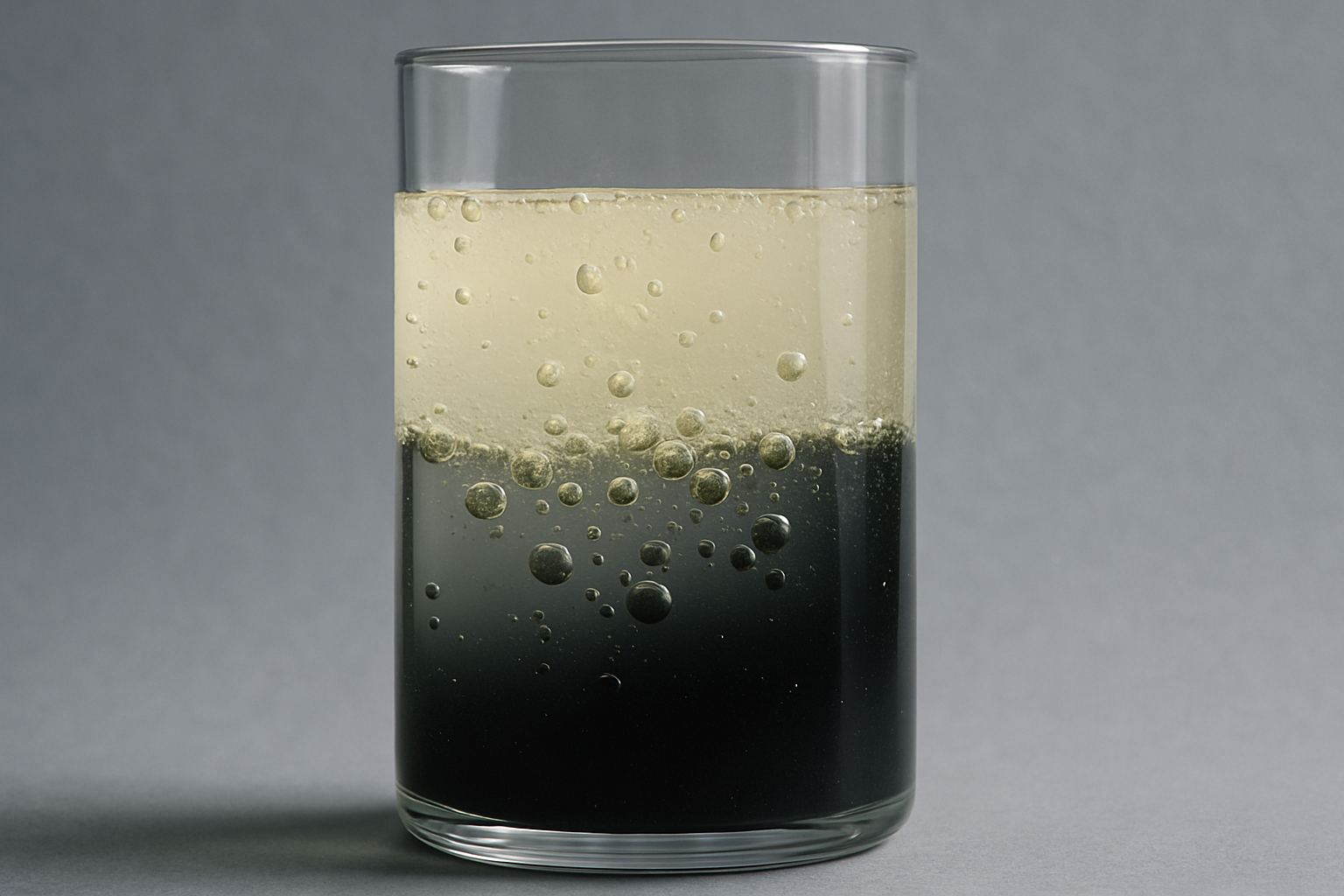
Biodegradation is the breakdown of a substance by microorganisms. Whether it happens, and how fast, depends on the substance, the organisms present, temperature, oxygen availability, nutrient levels and the concentration of the substance itself. A material that biodegrades readily in a warm activated sludge treatment plant may degrade very slowly in cold seawater, and a material that degrades in the water column may persist in sediment.
Standard test methods exist and are specific about conditions. A claim of ready biodegradability under a defined test method is a real, checkable statement. Biodegradable printed on a pack without qualification is an absolute claim, and absolute environmental claims require a high level of substantiation because a reader will take them to mean complete breakdown in the environment where the product ends up.
This sunscreen is biodegradable
- What would have to be true
- A stated test method and the conditions under which biodegradation was assessed.
- Whether the claim refers to the whole product, the formula excluding filters, or a single ingredient.
- Evidence that the degradation observed occurs in the environment the product actually enters, at realistic concentrations.
- What is established
- Standard biodegradability test methods exist and produce meaningful results within their stated conditions.
- The Green Claims Code requires claims to be substantiated, to avoid omitting important information, and to consider the full life cycle.
- What is not established
- That an unqualified biodegradable claim on a sunscreen has been substantiated in the relevant environment.
- That the metal oxide filters biodegrade at all. They are inorganic and do not: biodegradation is not a concept that applies to them.
The problem with an inorganic filter
This deserves stating directly because it is a category specific trap. Biodegradation is the microbial breakdown of organic matter into simpler compounds and eventually into carbon dioxide, water and biomass. Zinc oxide and titanium dioxide are inorganic. There is nothing to biodegrade. They do not break down into harmless organic products; they persist as particles, dissolve into ions, or transform into other inorganic species.
A mineral sunscreen described as biodegradable is therefore either making a claim about its oil phase and its polymers, in which case it should say so, or making a claim that cannot apply to its principal functional ingredient. Either way, a reader has been given information that leads to a conclusion the product does not support.
Ocean friendly, coral friendly, sea safe
These have no criteria whatever. They are not defined in law, no standard describes them, and no body verifies them. Under the requirement that claims must be clear, unambiguous and substantiated, a phrase with no criteria has no substantiation route, because there is nothing to substantiate against.
The Advertising Standards Authority publishes its rulings, and its treatment of absolute and ambiguous environmental claims across sectors is instructive reading for anyone drafting copy in this space. The pattern in that body of rulings is consistent: claims implying a general environmental benefit require substantiation covering the full life cycle, and qualifications that materially change a claim's meaning cannot be relegated to small print.
| Claim | What would substantiate it | Usual state |
|---|---|---|
| Ready biodegradability of a named ingredient | Test result under a stated standard method, with conditions | Achievable and occasionally provided |
| Biodegradable, unqualified, of a whole product | Whole formula assessed in the relevant receiving environment | Rarely available; not applicable to inorganic filters |
| Reef safe | A definition, criteria, a method and a verifier | None of these exist |
| Ocean friendly | Criteria of any kind | None exist |
| Free from named substances | The ingredient list | Checkable and usually accurate |
| Lower carbon footprint than a comparator | Life cycle assessment against a defined comparator and functional unit | Requires real work; occasionally done |

The life cycle principle, which is the hardest one
The requirement to consider the full life cycle is the principle most likely to defeat a claim in this category, because it forces attention onto things the claim was designed to avoid.
A mineral filter is produced by an energy intensive industrial process from mined ore. A plant oil carries land use, water use, agrochemical inputs, processing and transport. Packaging is frequently the largest single contributor to a cosmetic product's material footprint. A claim resting on the absence of two named organic molecules, while ignoring all of this, is a claim that has not considered the life cycle.
This is not an argument that mineral products are worse. It is an argument that nobody making these claims has done the assessment that would establish either direction, and that the Green Claims Code asks them to.
It names the property, states the method or standard, states the scope, and does not extend beyond what was measured. For example, a statement that a named ingredient meets a defined standard for ready biodegradability under a named test method, with the caveat that the statement concerns that ingredient rather than the whole product. Narrow, checkable and defensible.
Comparisons, and the comparator that is never named
The requirement that comparisons be fair and meaningful is worth its own treatment, because marine claims in sun care are almost always implicitly comparative and almost never explicitly so.
Better for the ocean invites the question: better than what? A conventional sunscreen, unspecified? No sunscreen at all? A product from the same range last year? Each comparator gives a different answer, and without one stated the claim cannot be assessed, which is a failure of clarity as well as of substantiation. A comparison also has to be like for like on a defined functional basis, which for sunscreen would mean equal delivered protection, since a product that protects less is not a fair comparator however little of it enters the sea.
There is a further trap. If a mineral product is compared favourably with an organic filter product on the basis that two named filters are absent, the comparison omits what replaced them. Metal oxides are not nothing, as set out in mineral filters and the environment, and a comparison that counts what was removed while ignoring what was added is not a fair one.
Who enforces this
The Advertising Standards Authority handles complaints about advertising claims and publishes its rulings, which are searchable. The Competition and Markets Authority enforces consumer protection law more broadly and has taken an active interest in green claims across sectors. Trading Standards services enforce at local level. None of these bodies pre approves claims; all of them act after the fact, which is why so many unsupportable claims are visible on shelves at any given moment.
A reader who believes a claim is misleading can complain to the Advertising Standards Authority, and the process is free.
The status recorded
Biodegradable is recorded as qualified: a real property, measurable under stated conditions, routinely claimed without them and not applicable to the inorganic filters at all. Ocean friendly and its relatives share the status of reef safe, recorded as unsupported for the same reason: there is nothing to check them against.